The Year in Drops: 2025's Biggest Wins, Fails, and WTF Moments
The Year in Drops: 2025's Biggest Wins, Fails, and WTF Moments
For the first time in a decade, bots outnumbered humans on the internet.
Let that sink in. In 2025, automated traffic hit 51% of all web activity. More than half of every click, every refresh, every checkout attempt -machines pretending to be people. And nowhere did this seismic shift land harder than in drop culture.
This was the year product drops went fully mainstream. And fully broken.
We watched Nintendo crash every major retailer at midnight while 2.2 million Japanese fans entered a lottery for half as many consoles. We watched Oasis tickets jump from £148 to £355 mid-queue -while fans waited nine hours with no idea the price was rising. We watched Ticketmaster survive another superstar meltdown and a DOJ lawsuit that's headed to trial. And we watched a soap company sell bars infused with Sydney Sweeney's literal bathwater for $8 -then flip on eBay for $725.
But we also watched something else: brands that got it right. Nigel Sylvester's "Brick by Brick" Jordan 4 earned Sneaker of the Year. UNDEFEATED turned a 72-pair grail into 100,000 opportunities. Artists like Pearl Jam, Billie Eilish, and The Cure demanded -and achieved -face-value ticket caps.
The gap between winners and losers has never been wider. And the pattern has never been clearer.
We've been watching. We've been tracking. Here's what we learned.
The Drops That Delivered: When Brands Put Fans First
Not everything burned this year. Some brands proved that fair access isn't just possible -it's a competitive advantage. Here's how they did it.
Nigel Sylvester Built It Brick by Brick
The Nigel Sylvester x Air Jordan 4 "Brick by Brick" release on March 14 wasn't just a sneaker drop. It was a clinic in multi-channel execution.
ComplexCon named it 2025's Sneaker of the Year. The Tracksuit/Bimma Williams Report ranked it the #1 collaboration of the year, noting it "made Jordan feel dangerous again." And here's the kicker: resale hit 400% profit ($600-700+ against $225 retail) -yet customer sentiment remained overwhelmingly positive.
How? Distribution strategy that actually distributed.
Nike deployed SNKRS Draw raffles, certified retailer raffles, and SNKRS Pass for an early NYC-exclusive drop. Off-app, Sylvester's personal site hosted additional lottery entries. IRL activations included a giant brick truck driving through SoHo and a fashion show preview that generated organic social content for weeks.
The storytelling mattered too. Sylvester's Queens upbringing, the "building success brick by brick" narrative -it wasn't just marketing copy. It was emotional architecture. When a viral video showed grandmothers celebrating their W, it proved the community-first approach had landed.
Nike extended the moment into Fortnite in May. An August restock for Sylvester's birthday maintained momentum without diluting exclusivity. The playbook: multiple entry points, authentic narrative, infrastructure that held.
UNDEFEATED Democratized Grail-Level Heat
The original 2005 UNDEFEATED x Air Jordan 4 produced exactly 72 pairs. They now fetch $20,000+ on the secondary market. For the 20th anniversary retro, UNDEFEATED created approximately 100,000 opportunities to own a piece of sneaker history.
But they didn't just flood the market. They orchestrated.
Five distinct phases rolled out over a month:
- Phase 1 (July 25): A Chicago pop-up with a geo-locked QR code raffle -you had to be at exact coordinates in Millennium Park to enter
- Phase 2 (July 28-30): Online raffle registration with simultaneous in-store entries across five cities
- Phase 3 (August 2): First-come-first-served online drop and global Chapter Store release
- Phase 4 (August 28): SNKRS Exclusive Access targeting members who'd entered multiple prior AJ4 drops
- Phase 5 (August): Paris pop-up at Pablo T-Shirt Factory
The accompanying documentary featuring co-founder James Bond and sneaker luminaries including Eric Koston and Mark Ronson added cultural weight that transcended typical hype cycles.
As Complex concluded: "UNDFTD did the right thing... if it gives almost 100,000 of us a chance at owning literal history, that's a win."
Artists Demanded What Fans Deserved
The most powerful force for fair access in 2025 wasn't technology -it was artist leverage.
Pearl Jam, Billie Eilish, The Cure, and Neil Young all used Ticketmaster's Face Value Exchange, which caps resale at original purchase price. No scalper profit motive. No $2,000 nosebleeds. Just tickets priced as intended.
After the catastrophic UK sale, Oasis eliminated dynamic pricing entirely for North American dates. They implemented fan verification questionnaires -requiring answers to questions like "Who was the drummer in the initial Oasis line-up?" -to ensure tickets reached actual fans rather than resellers who couldn't name a B-side.
Telfar maintained its "for everybody" ethos with the Plastic Bag launch, pricing at $148 regular and $195 jumbo while using demand-based pricing that lowers costs as demand rises. The opposite of surge pricing. The opposite of extraction.
When artists and brands with leverage use it for fans instead of against them, everyone wins except the bots.
The Meltdowns: Same Chaos, Different Logo
And then there were the disasters. If you've been paying attention, the playbook should look familiar: infrastructure that couldn't handle the stampede, communication that went dark when fans needed it most, and policies that punished the wrong people.
Nintendo Switch 2: Thirty Years of Experience, Thirty Minutes of Chaos
The April 24 Nintendo Switch 2 pre-order launch (originally scheduled for April 9, delayed by tariff uncertainty) became what social media called "one of the worst console launches in 30+ years."
At $449.99 standalone and $499.99 for the Mario Kart World bundle, demand was always going to be intense. But the execution was catastrophic across every major retailer -simultaneously.
Target saw items vanish from carts during checkout. Customers reported re-entering payment information 100+ times before receiving automatic cancellations. Best Buy went live 30+ minutes late, sold out within minutes, then sent cancellation emails to customers who had successfully checked out -they'd oversold their allotment. Walmart displayed a static queue page with no progress indication while users waited 2+ hours. Most orders were later canceled anyway. GameStop experienced Cloudflare issues, with the site crashing whenever stock appeared.
The scale of demand was staggering. In Japan alone, 2.2 million people applied for Nintendo's lottery against approximately 1.2 million available units. Nintendo's April 23 statement admitted demand "far exceeds our expectations." eBay listings appeared within minutes at $700-$2,000 -50-300% above MSRP. Walmart offered affected customers $25 credits as if that made it okay.
"I refreshed the second it hit 12 AM -actually unreal."
- @Kenjdx, watching Target sell out instantly
The root causes weren't mysterious: no cart reservation system, no identity verification, bot and scalper activity competing with legitimate buyers, and fundamental underestimation of demand despite an 8-year wait for a successor console.
Best Buy's response? They announced no online console sales during launch week. In-store only, ticket system. The digital surrender.
Oasis: Dynamic Pricing Meets Democratic Outrage
The August 31, 2024 general sale for Oasis' "Live '25" reunion tour became a case study in how to transform fan excitement into regulatory investigation.
Over 1 million tickets sold across UK and Ireland dates. The demand was real -"multi-billions" of bot attempts according to Live Nation CEO Michael Rapino. But the execution broke every rule of fair access.
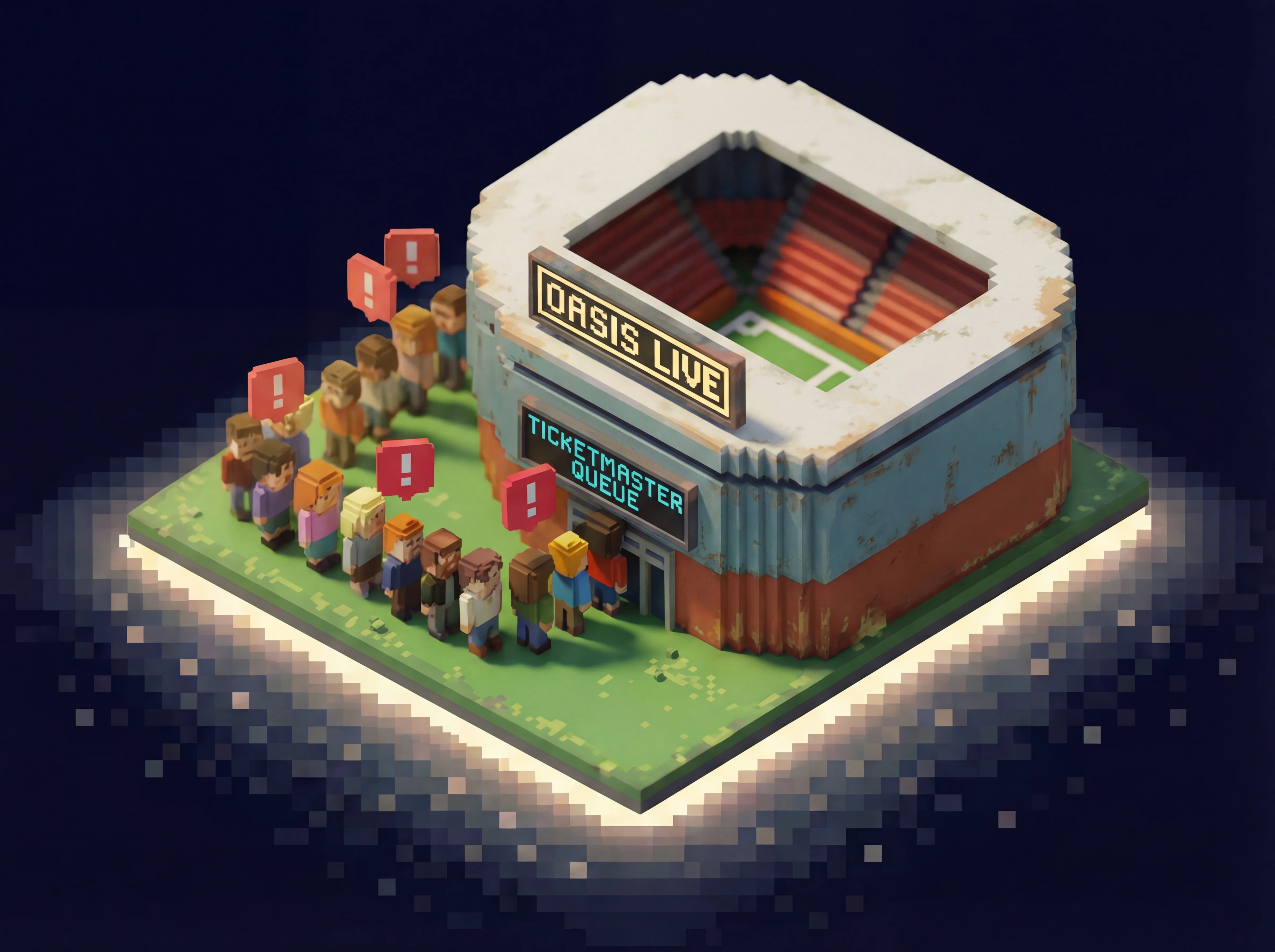
Fans reported 9+ hour wait times in virtual queues. Queue positions exceeded 400,000. And throughout those hours of waiting, something else was happening: prices were rising.
Standing tickets jumped from £148 to £355 -a 140% increase -during the sale. "Platinum" tickets sold at 2.5x standard prices without explaining they offered no additional benefits beyond existing. Fans waited hours with no idea the price on the other side was surging. Those Platinum tickets later appeared on secondary markets at up to £23,899.
The UK's Competition and Markets Authority launched a formal investigation in September 2024 and issued findings in September 2025: Ticketmaster may have "breached consumer law" and "misled fans." The CMA secured formal undertakings requiring 24-hour advance notice of tiered pricing, price range disclosure when fans join queues, and elimination of misleading ticket labels.
"There has got to be a fairer, simpler, more efficient way of selling tickets."
- Dan Walker
The Oasis debacle didn't just anger fans. It created regulatory precedent. New enforcement powers under the Digital Markets, Competition and Consumers Act now enable fines up to 10% of global turnover. The most expensive ticket in 2025 might be the one Live Nation has to pay.
Beyoncé's Cowboy Carter: The Pattern Repeats
The February 2025 Cowboy Carter Tour presale proved that Ticketmaster learned nothing from Taylor Swift's 2022 Eras Tour disaster -which saw 3.5 billion requests and 14 million simultaneous users trigger Congressional hearings.
Same story, different superstar. Crashes. Freezes. Dynamic pricing pushing tickets from $71-$801 base to substantially higher prices in real-time. London seated tickets soared to £700+. #CowboyCarterTour trended for all the wrong reasons.
"£700 to sit in a stadium? This is actually criminal."
- Fan reaction on social media
The infrastructure improvements Ticketmaster promised after Eras Tour remained insufficient for superstar-tier demand. The pattern is now undeniable: legacy platforms cannot handle modern hype at scale.
Coldplay Broke India's BookMyShow
The September 2024 Coldplay India ticket sale crashed BookMyShow when 13 million fans attempted simultaneous access. The platform failed minutes before the 12pm IST sale. Wait times stretched hours. Queue numbers exceeded 500,000. Tickets sold out within minutes after service partially restored.
BookMyShow's CEO was summoned over black market allegations -echoing the platform's 2023 ICC World Cup ticketing fiasco. Different event, same failure mode.
The common thread across every disaster: infrastructure built for normal days colliding with extraordinary demand. First-come-first-served systems against 51% bot traffic. Communication that went dark precisely when fans needed transparency most. And policies that treated loyal customers like the enemy.
The WTF Files: When Drops Defied All Logic
And then there was the weird. The wonderful. The moments that made us ask what exactly is happening to commerce.
Sydney Sweeney's Bathwater Sold Out in Minutes
The Dr. Squatch x Sydney Sweeney "Bathwater Bliss" collaboration stands as 2025's most audacious marketing stunt. And it worked beyond anyone's imagination.
The origin story: Sweeney's October 2024 "Body Wash Genie" ad campaign generated floods of comments requesting her actual bathwater. So Dr. Squatch delivered. Literally.
During the 2024 shoot, crews filled a separate tub with purified water. After Sweeney bathed, they collected, treated, and infused it into 8,000 bars of soap named "Morning Wood" (notes of pine, Douglas fir, earthy moss). Only 5,000 bars went to market at $8 each, with certificates of authenticity.
The pre-launch campaign engineered virality systematically. Teaser content dropped May 28. Full product announcement May 29 alongside a 100-bar giveaway. Nearly 1 million fans entered (973,000+ entries in 5 days per Adweek). Dr. Squatch posted "wild fan mail" including requests to use the bathwater for bonsai trees and eye drops.
At launch on June 6, the product sold out within minutes. Customers reported checkout wait times exceeding 4 hours in the virtual queue. Many had soap in their carts that disappeared before completing purchase.
The aftermath: 10+ billion social media impressions. 74 billion earned media impressions across digital, print, broadcast, and radio. 100,000+ new Instagram followers in one week. 20% week-over-week revenue increase for Dr. Squatch. Coverage spanned CNN, GQ, Hollywood Reporter, NY Times, People, USA Today, NBC News, and Variety.
Resale prices exploded: eBay sales reached $725. StockX averaged $251. Most listings ranged $400-700+.
The campaign became a trade publication case study. Dr. Squatch was subsequently acquired by Unilever. Not bad for soap that started as a comment section joke.
Chili's Booth Boots: From Restaurant Vinyl to $50,000 Listings
Texas casual dining chain Chili's partnered with cowboy boot brand Tecovas to create boots made from genuine Chili's restaurant booth vinyl material. On July 29, 50 pairs worldwide dropped at $345 -featuring chili pepper stitching details.
The collection sold out in under one minute.
Resale listings immediately appeared on eBay at $1,900 to $50,000. The collaboration contributed to Chili's remarkable 2025 brand renaissance -the chain was named Ad Age's 2025 Brand of the Year.
Restaurant booth upholstery. Cowboy boots. Five figures on resale. The hype economy has no ceiling.
A TikTok Meme Forced In-N-Out to Change Its System
In-N-Out Burger removed order number 67 from its system in November 2025 after the viral "6-7" TikTok meme caused operational chaos.
The phenomenon stems from the song "Doot Doot (6 7)" by Skrilla, popularized through edits featuring NBA player LaMelo Ball (who is 6'7" tall). Whenever order #67 was called at In-N-Out locations, crowds of teenagers erupted in cheering, jumping, and chanting -creating safety concerns and service delays.
Dictionary.com named "6-7" the 2025 Word of the Year -the first time a number received the honor.
In-N-Out's response: orders now skip from 66 to 68 (also removing #69 to prevent similar issues). No public statement was issued. Pizza Hut, meanwhile, capitalized on the trend with a 67-cent wings promotion. Divergent strategies for meme-driven chaos.
What these moments reveal: hype no longer follows predictable patterns. Virality can emerge from comment sections, dining booth materials, or queue number sequences. The brands that win aren't predicting culture -they're building infrastructure flexible enough to respond when culture comes for them.
The Bigger Picture: What 2025 Revealed About Where We're Headed
Strip away the individual drops and a clear pattern emerges. 2025 was the year three forces collided: bot supremacy, regulatory awakening, and fan-first infrastructure proving its value.
The Bots Won the Numbers Game
The 2025 Imperva Bad Bot Report confirmed machines now run the internet. Automated traffic hit 51% of all web activity -the first time bots outnumbered humans in a decade. Bad bot traffic specifically reached 37% of all internet traffic, the sixth consecutive year of growth.
During the 2024 holiday shopping season, 57% of retail traffic was automated according to Radware. In retail specifically, 59% of traffic came from advanced bots capable of behavioral mimicry. AI-powered attacks increased 300% year-over-year per Akamai.
CAPTCHA defenses have essentially collapsed. Commercial CAPTCHA-solving services claim 95-100% success rates. An ETH Zürich study demonstrated AI achieved 100% success against image-based reCAPTCHA v2 -while humans only managed 50-85% accuracy.
Nike's SNKRS platform processes 12 billion monthly bot requests. On the Travis Scott x Air Jordan 1 "Reverse Mocha" (3.8 million total entries), bots comprised approximately 50% of all entries. A Ma Maniére founder James Whitner revealed his company spends $500,000 for 4 minutes of bot protection per major release.
The arms race isn't slowing down. It's accelerating.
Regulators Finally Found Their Teeth
The FTC vs. Key Investment Group case in August 2025 marked the first new BOTS Act enforcement since 2021. For Taylor Swift's Eras Tour alone, the group allegedly acquired 2,200+ tickets generating $1.2+ million in resale revenue. The FTC is seeking "tens of millions of dollars" in civil penalties, with the BOTS Act authorizing up to $53,088 per violation.
Executive Order 14254, signed March 31, 2025, directs the FTC to "rigorously enforce" the BOTS Act. The DOJ antitrust lawsuit against Live Nation/Ticketmaster survived a motion to dismiss in March 2025, with trial scheduled for March 2026. The case alleges Live Nation controls 86% of primary ticketing for major concerts.
The TICKET Act passed the House 409-15 on April 29, 2025, requiring all-in pricing disclosure and banning speculative ticketing. Nearly 70 ticketing bills were introduced across 30 states in 2025.
The regulatory environment has shifted from hand-wringing to enforcement. Live Nation's defense that "the system works" looks increasingly untenable when Congressional hearings, DOJ lawsuits, and CMA investigations all arrive in the same calendar year.
The Economics of Failure
Average downtime now costs $14,056 per minute -a 150% increase from 2014. Large enterprises face $23,750 per minute ($1.425 million hourly). 98% of organizations report downtime costs exceeding $100,000 per hour.
Consumer trust metrics reflect the cumulative damage. Per Queue-it's research, it takes 4 positive experiences to build trust but only 2 negative experiences to lose it. 66% of consumers report being less likely to trust businesses after overselling incidents. One-third of consumers report frustration from bots ruining purchase experiences.
The math is simple: chaos is expensive. Fair access infrastructure is an investment. Every brand running legacy systems on high-demand drops is playing Russian roulette with their customer relationships.
What 2025 Taught Us About 2026
The year ahead will be defined by three dynamics.
First, the DOJ vs. Live Nation trial in March 2026 may structurally reshape the ticketing industry. If Live Nation's 86% market control faces forced divestiture or operational restrictions, the ripple effects will touch every artist, every venue, and every fan trying to buy a ticket.
Second, enforcement outcomes from the FTC's BOTS Act prosecution will establish precedent. If key Investment Group faces tens of millions in penalties, the risk calculus for professional scalping operations changes overnight.
Third, the infrastructure gap will widen. Brands that invested in fair access technology in 2024-2025 have compounding advantages: better data on their superfans, higher customer lifetime value, and reputations as places where real fans get real chances. Brands still running legacy systems will face increasing pressure from consumers who've experienced what good looks like.
The pattern is undeniable. The winners built for the stampede. The losers keep hoping the stampede won't come.
It's coming. It's always coming. The only question is whether your infrastructure is ready -or whether you're the next cautionary tale trending for all the wrong reasons.
The frenzy is a feature. The chaos is a choice.
2025 proved that fair access isn't just ethically right -it's commercially superior. The brands that treated fans like people instead of traffic earned loyalty that no advertising budget can buy. The brands that treated drops like afterthoughts earned investigations, backlash, and permanent reputation damage.
The tools exist. The playbooks are proven. The regulatory environment is demanding change.
The only remaining question: which side of the 2026 retrospective do you want to be on?
Fanfare builds infrastructure for drops that don't crash, burn, or betray your most loyal customers. No bots. No broken queues. Just fair access that turns stampedes into standing ovations.
WANT TO TURN YOUR NEXT LAUNCH INTO AN EXPERIENCE?
Join the waitlist to get early access to Fanfare and start building a community of fans, not just customers.